



Born in America: How Dodge, Chrysler, and RAM Have Driven the American Dream for Over 100 Years
 America turns 250 this year, which is a milestone that calls for looking back at not only the events in history books, but at the companies, workers, and machines that helped build the country into what it has become. Few names in American industry tell that story better than Dodge, Chrysler, and RAM.
Here is a look back on the legacy of the vehicles we sell every day at Artioli Chrysler Dodge RAM in Enfield.
It Started with Two Brothers from Niles, Ohio
Before it became an American icon, John and Horace Dodge simply set out to build a better car.
The Dodge Brothers Company was founded in 1914 in Hamtramck, Michigan, by two machinist brothers who had already made their names supplying precision parts to Henry Ford. When they broke away to build their own vehicle, they brought with them an engineer’s obsession with quality and a working man’s understanding of how a vehicle should function. The first Dodge automobile rolled off the line that year with an all-steel body at a time when most competitors were still using wood framing. It was tougher, more durable, and more honest than what the market was used to.
Within two years, Dodge was the second best-selling car in America.
That foundation, built on craft, durability, and the refusal to cut corners, is the thread that runs through everything that followed.
The Arsenal of Democracy Had a Dodge Address
When the United States entered World War II, the federal government asked American industry to transform entirely. Chrysler answered that call as completely as any company in the country.
The Chrysler Corporation converted its manufacturing operations to wartime production on a scale that is still remarkable to consider. Its Detroit Tank Arsenal, built in just 180 days in 1941, became the largest tank manufacturing facility in the world, producing the M3 and M4 Sherman tanks that equipped Allied forces across multiple theaters of the war. Dodge plants produced military trucks, ambulances, and the three-quarter-ton weapons carrier that became one of the most essential utility vehicles of the entire conflict. By the time the war ended, Chrysler had manufactured more than 25 percent of all American military vehicles produced during the war.
Factory workers from towns like Enfield, Hartford, and Springfield showed up every day knowing that what they built had a direct bearing on whether American soldiers came home. The output from those plants helped turn the tide of the war.
The Commercial That Spoke to America
In 2013, RAM Trucks aired a Super Bowl commercial that didn’t look or sound like any car ad before or since. There were no celebrities, no chase sequences, no dramatic music swells. There was only the voice of Paul Harvey, the radio broadcaster whose delivery was as distinctly American as anything that ever came out of a speaker, reading a piece he had originally performed in 1978.
“God Made a Farmer.”
Over two minutes, Harvey described the person who gets up before dawn and works past dark, who fixes what’s broken and plants what might not grow, who carries the weight of a family and a community and a way of life on their back without asking for recognition. At the end, there was a simple title card for RAM Trucks.
The commercial gained popularity because it captured something that Americans recognized about themselves and their neighbors, something that unites us as a country. RAM understood that its customers weren’t buying a truck for what it said about them. They were buying a truck because they needed a powerful, dependable vehicle.
That ad remains one of the most shared and emotionally resonant pieces of automotive advertising ever produced. It worked because the brand had earned the right to tell that story.
Surviving Through Difficult Times
The history of Dodge, Chrysler, and RAM is one of survival.
Chrysler nearly collapsed in the late 1970s before Lee Iacocca’s turnaround became one of the most studied chapters in American business history. The company faced bankruptcy again during the 2008 financial crisis, restructured, and came back with a renewed focus on the trucks and vehicles that had always been its core. Through the Great Depression, multiple recessions, two World Wars, an oil crisis, and an industry upheaval that wiped out weaker competitors entirely, the brands that now live under the Stellantis umbrella kept building.
There’s something distinctly American about that arc. Not the wins, but the willingness to absorb a devastating loss and come back to work anyway.
RAM as a Symbol of the American Work Ethic
RAM became its own standalone brand in 2010. The truck had always carried a distinct identity, one built around capability, dependability, and the needs of people who use their vehicles as tools rather than accessories.
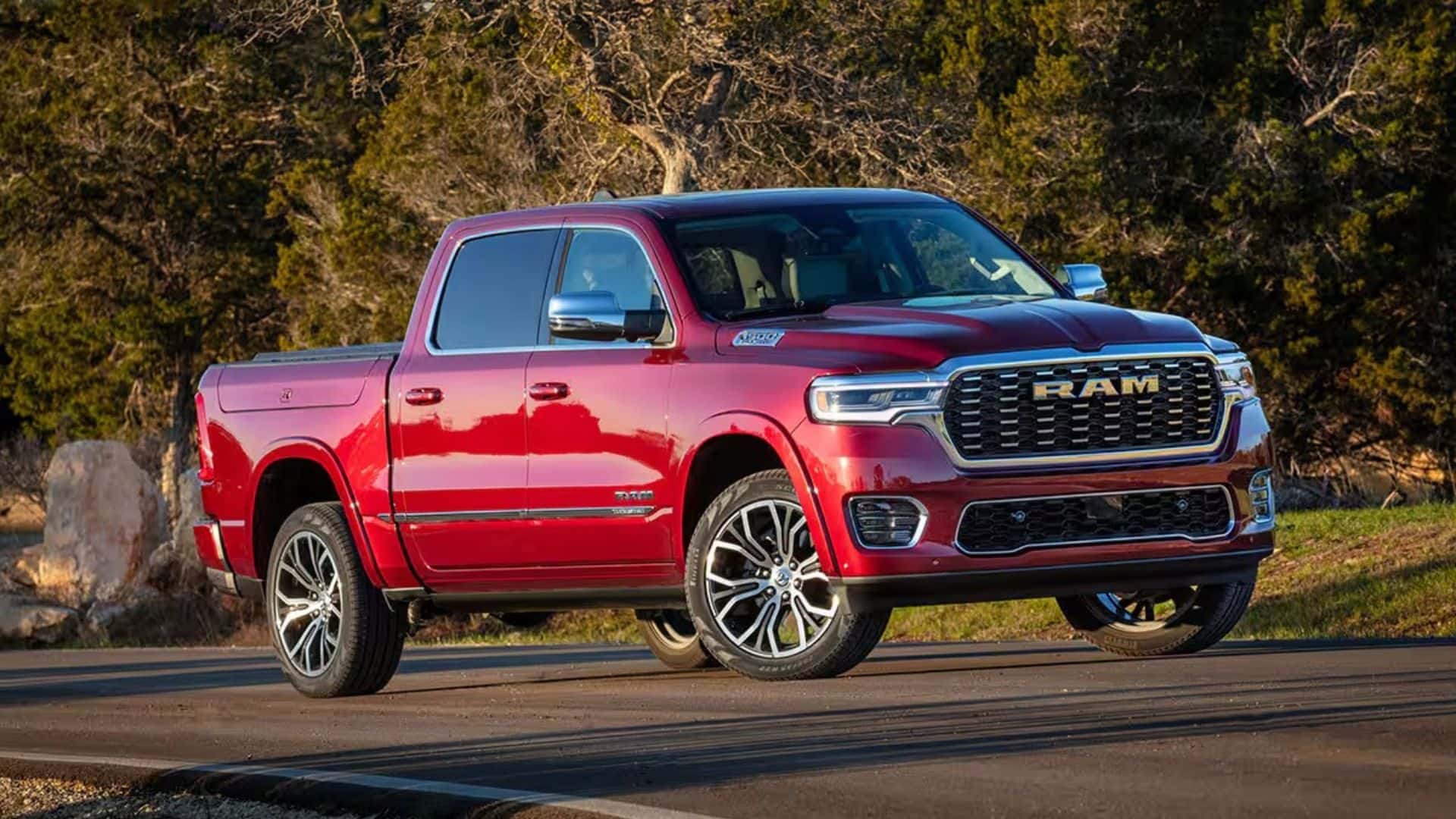
Today’s RAM 1500, Heavy Duty, and ProMaster lineup serves the same trades and industries that have always driven American productivity: construction, agriculture, contracting, plumbing, electrical, and the thousand other forms of skilled work that keep the infrastructure of daily life functioning. The trucks have gotten quieter, more efficient, and more technologically sophisticated, but the core promise hasn’t changed. RAM is built strong, made to last, and is engineered to be the truck you can depend on.
Proud to Carry the Tradition Forward in Enfield
We’ve spent years putting Dodge, Chrysler, and RAM vehicles into the hands of loyal Artioli customers. Connecticut workers, families, and businesses rely on us and we take that seriously because we’re part of the same community as the people who drive off our lot.
This July, as the country marks its 250th anniversary, come visit us at our Enfield showroom and browse our new and pre-owned inventory or. There’s no better time to celebrate 250 years of American ingenuity than behind the wheel of a vehicle that has been part of America’s story for over a century.
0 comment(s) so far on Born in America: How Dodge, Chrysler, and RAM Have Driven the American Dream for Over 100 Years